The Standard of an “Attractive City” According to CNN
CNN이 말한 ‘매력적인 도시’의 기준
Why Korean Cities Are Being Noticed Agai
그 변화 속에서 다시 주목받는 한국 도시

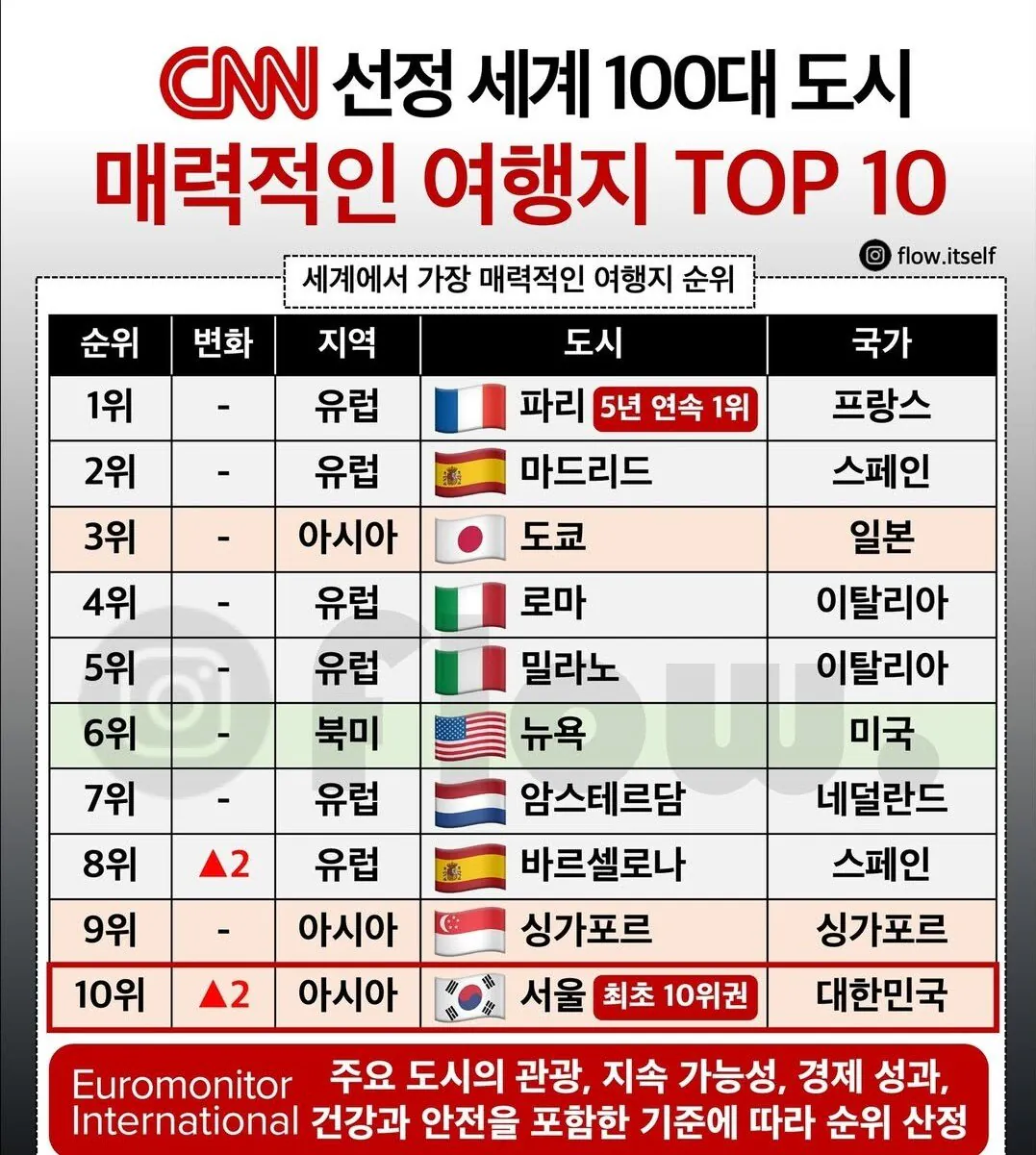
CNN’s recently published list of the “Most Attractive Cities in the World” is more than a simple travel recommendation.
It reflects a broader shift in how cities are being evaluated as travel destinations.
In the past, famous landmarks and iconic tourist attractions were often the key criteria.
Today, however, the focus has shifted to what kind of experiences a city can offer to travelers.
Within this changing perspective, Korean cities—especially Seoul—are beginning to attract renewed attention.
-
이 리스트는 도시 여행을 바라보는 기준이 어떻게 바뀌고 있는지를 보여준다.
예전에는 유명 랜드마크나 관광지가 중요한 기준이었다.
하지만 지금은 도시 안에서 어떤 경험을 할 수 있는지가 더 중요한 평가 요소가 되고 있다.
이 변화 속에서 서울을 비롯한 한국의 도시들이 다시 언급되기 시작했다.
Key Takeaways - 핵심 요약
The trend revealed by CNN’s list is fairly clear.
• Cities built around isolated tourist districts are becoming less central.
• Cities where everyday life naturally overlaps with visitor experiences are gaining attention.
• Environments where travelers can move through the city like part of its daily rhythm are becoming more important.
From this perspective, Korean cities show several interesting characteristics.
-
이번 CNN 리스트가 보여주는 흐름은 비교적 분명하다.
• 관광을 위해 분리된 공간이 중심이 되는 도시보다
• 일상과 여행자의 동선이 자연스럽게 섞이는 도시가 주목받고 있으며
• 여행자가 도시의 일부처럼 움직일 수 있는 환경이 중요해지고 있다는 점이다.
이 기준에서 보면 한국의 도시들은 매우 흥미로운 특징을 가진다.
A Changing Standard for Urban Travel
도시 여행의 기준이 달라지고 있다
Modern travelers are increasingly drawn to places where they can see the real life of a city rather than spaces designed solely for tourists.
Streets filled with people commuting to work.
Neighborhood markets where locals shop for groceries.
Alleys where people gather after work.
Within these scenes, travelers are no longer just visitors.
They become people moving within the rhythm of the city itself.
As a result, urban travel is gradually shifting away from landmark-focused sightseeing toward experiencing the everyday life of a city.
-
최근 여행자들은 관광객만을 위해 만들어진 공간보다
도시의 실제 생활이 보이는
장소를 더 흥미롭게 느낀다.
출근하는 사람들이 지나가는 거리
주민들이 장을 보는 동네 시장
퇴근 후 사람들이 모이는 골목
이런 풍경 속에서 여행자는 단순한 방문자가 아니라
도시의 흐름 속을 함께 지나가는 사람이 된다.
그래서 최근 도시 여행은
랜드마크 중심의 방문보다
도시의 일상을 경험하는 방식으로 바뀌고 있다.
Korean Cities Through This Lens
이 기준에서 본 한국 도시

Seen from this perspective, Korean cities stand out in interesting ways.
Many Korean cities—including Seoul—do not rely heavily on spaces created exclusively for tourism.
Instead, existing living spaces naturally become part of the travel experience.
For example:
• On the streets, visitors can observe the daily commute of office workers.
• In neighborhood markets, locals and travelers share the same food experiences.
• In small alleys, everyday life unfolds naturally.
These scenes may feel ordinary to local residents, but for international visitors they offer a unique urban experience.
This is why CNN’s perspective highlights Korean cities as places with a high density of everyday life.
-
이 관점에서 보면 한국의 도시들은 상당히 독특하다.서울을 비롯한 많은 한국 도시는
관광객을 위해 따로 만들어진 공간보다
이미 사용되고 있는 생활 공간이 여행 동선이 되는 구조를 가지고 있기 때문이다.
예를 들어
• 거리에서는 직장인의 출근길을 볼 수 있고
• 동네 시장에서는 주민과 여행자가 같은 음식을 경험한다
• 골목에서는 일상적인 생활 풍경이 그대로 이어진다
이러한 장면은 한국 사람들에게는 익숙하지만
외국인 여행자에게는 새로운 도시 경험이 된다.
CNN이 바라본 한국 도시는
생활 밀도가 높은 도시라는 점에서 특별하다.
Seoul: A City Where the Entire Urban Landscape Becomes the Experience
서울, 도시 전체가 하나의 경험
Seoul is a city that cannot easily be defined by a single image.
You might walk past a royal palace and suddenly find yourself in a modern business district.
Strolling through a traditional market alley can lead you to a trendy café street.
These connections are not carefully designed tourist routes.
They emerge from the way the city actually functions.
Because of this, many international visitors do not simply follow fixed tourist paths.
Instead, they experience Seoul by moving naturally within the city’s rhythm.
In Seoul, the entire city becomes part of the travel experience.
-
서울은 하나의 이미지로 설명하기 어려운 도시다.
궁궐을 지나면 현대적인 업무 지구가 나타나고
시장 골목을 걷다 보면 트렌디한 카페 거리로 이어진다.
이 연결은 관광을 위해 설계된 동선이 아니라
도시가 실제로 작동하는 방식에서 만들어진 흐름이다.
그래서 많은 외국인 여행자들은
정해진 관광 코스를 따라 움직이기보다
도시의 리듬 속에서 서울을 경험한다.
서울에서는
도시 전체가 하나의 여행 장면이 된다.
Another element CNN frequently highlights when describing Korean cities is food culture.
In Seoul, food is more than just a meal.
Food encourages movement across the city.
It connects people with new places.
It shapes the rhythm of an entire day.
Street food markets
Local restaurants in narrow alleys
Late-night food stalls
These spaces function not just as dining spots but as cultural codes that help visitors understand the city of Seoul.
For many international travelers, Seoul becomes a city remembered through taste.
-
CNN이 한국 도시를 설명할 때 빠지지 않는 요소가 있다.
바로 음식 문화다.
서울에서 음식은 단순한 식사를 의미하지 않는다.
음식은 사람을 이동하게 만들고
새로운 장소로 연결하며
도시의 하루 리듬을 만든다.
시장 음식
골목 식당
포장마차
이 공간들은 단순한 식당이 아니라
서울이라는 도시를 이해하는 하나의 문화 코드처럼 작동한다.
그래서 많은 외국인 여행자에게 서울은
맛으로 기억되는 도시가 된다.
All in One [Korean food+shopping+History]
home.cosmojin.com
home.cosmojin.com
home.cosmojin.com
A City with High Experience Density
짧은 일정에서도 가능한 도시 경험
Another reason Seoul appeals to international visitors is its density of experiences within a short amount of time.
Without traveling long distances, visitors can encounter:
• historical spaces alongside modern streets
• central business districts and local neighborhoods
• everyday life and tourism in close proximity
Because of this structure, even travelers visiting Korea for business or on short trips can experience multiple layers of the city.
This is one of the elements CNN highlights when evaluating Seoul’s urban structure.
-
서울이 외국인에게 매력적인 또 하나의 이유는
시간 대비 경험의 밀도다.
서울에서는 긴 이동 없이도
• 역사 공간과 현대적인 거리
• 도심과 지역 상권
• 일상과 관광
이 세 가지가 가까운 거리 안에서 함께 존재한다.
그래서 출장이나 짧은 일정으로 방문한 여행자도
도시의 다양한 모습을 경험할 수 있다.
home.cosmojin.com
What CNN’s Perspective Reveals
CNN의 시선이 말해주는 것
CNN’s evaluation is not simply about declaring Korea a popular destination.
Instead, it signals a broader shift in how urban travel is perceived.
Travel is no longer just about visiting famous landmarks.
It is increasingly about spending time within the everyday flow of a city.
Within this evolving framework, Korean cities already fit naturally into the new standards of urban travel.
-
이번 CNN의 평가는 단순히 한국이 인기 여행지라는 의미에 머물지 않는다.
오히려
도시 여행을 바라보는 방식이 바뀌고 있다는 신호에 가깝다.
여행은 이제
랜드마크를 방문하는 활동이 아니라
도시 안에서 시간을 보내는 경험으로 이동하고 있다.
그리고 그 변화의 흐름 속에서
한국의 도시들은 이미 새로운 기준 안에 들어와 있다.
Conclusion - 마무리
The cities attracting attention today are not defined by spectacular landmarks.
They are defined by:
• the way people move through the city
• the everyday flow connecting alleys and food
• the ordinary scenes that shape urban life
Within these criteria, Korean cities already possess the qualities of a compelling urban travel experience.
This is why travelers around the world are beginning to see Korea not simply as a tourist destination, but as a city to experience.
-
CNN이 주목한 도시들의 공통점은 화려한 랜드마크가 아니다.
• 사람이 움직이는 방식
• 골목과 음식이 이어지는 생활의 흐름
• 도시가 만들어내는 일상의 장면
이 기준 속에서 한국의 도시는
이미 새로운 도시 여행의 조건을 갖추고 있다.
그래서 지금
세계 여행자들은 한국을 관광지가 아니라 경험하는 도시로 바라보고 있다.


.jpg)
Comments
Post a Comment